Volunteering and Its Benefits

Volunteering and Its Benefits

If Shakespeare does not mind, I would like to substitute the word Mercy in his quote ‘The virtue of Mercy falls like gentle rain from heaven’ to Volunteering. Volunteering blesses those who volunteer and those for whom one volunteers.

There are countless benefits of volunteering. Apart from your values, passions and interests finding an outlet, volunteering opens a whole new world of social and cultural experience, new friends and networks. It develops one’s confidence, self-esteem and enables one to learn new skills. It also opens doors for career opportunities. Volunteering is a wonderful cure for loneliness and encourages social connectedness.

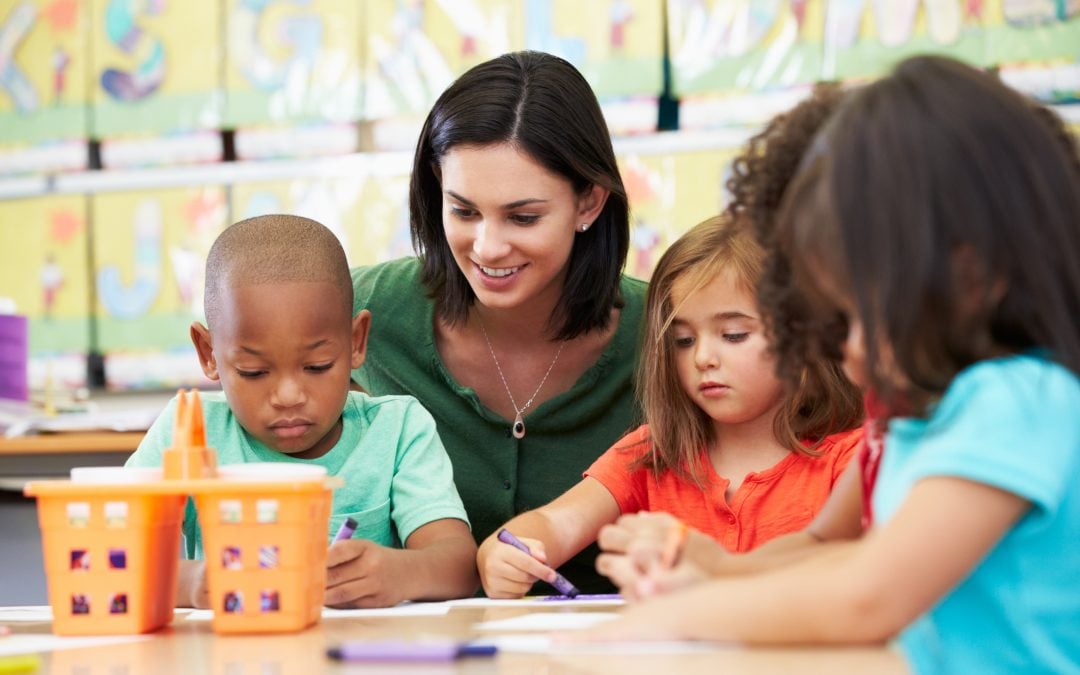
EdConnect connects over 1000 volunteers with thousands of young people in schools throughout Australia every year who need additional support in literacy and numeracy. These trained volunteers support class activities and become a positive role model for young and fertile minds. By dedicating one or two hours per week volunteers have made a huge difference in a young child’s life academically and emotionally well beyond their formative years.

EdConnect is looking for volunteers to help out in Homework Clubs in both Caroline Springs and Melton area. For more information please call 1800 668 550.

If you have a passion for making a difference in the life of a child and rewarding yourself then show your interest by completing the application form on http://www.edconnectaustralia.org.au/volunteer/volunteer-application-form/

Learning Pathways

Creating equitable learning pathways for children and families.

The City of Melton continues to lead the way in utilising learning as a key driver for change, by ensuring all Melton citizens have equitable access to learning opportunities that enable individual empowerment, build social cohesion and drive economic development, cultural prosperity and sustainable development for our city.

We are always searching for ways to improve the lives of our residents and to engage families in the growth of our learning city.

The Global Family Research Project has a long history and an established track record in defining and advancing the fields of family, school, and community engagement. They work across boundaries—with early childhood and after-school organisations, schools, digital media, libraries, museums, and others working on behalf of children and families—to ensure that families are empowered in children’s learning, from early childhood to young adulthood.

They encourage global connections by lifting up and sharing innovative family and community engagement strategies, research, and practices.

This is a recent video from their work on learning pathways – something that Melton City Council is committed to further developing in our City.

Meet Mateo and experience his learning pathway, from birth to college.

Experience the Ecology of Learning, our vision for all children and families—especially those with the greatest needs.

An ecology of learning includes the places and interactions that offer opportunities for learning, development, and achievement throughout a person’s life.

This environment inspires exploration, creativity, connections with others, and support in mastering skills at home, and in school, the community, and digital spaces.

Watch this fun video that helps to explain learning pathways and how families can support their child to achieve their dreams.

https://youtu.be/3AES90nzxwk

Life Skills We All Need

What Life Skills Should Every Child Master?

Parents often stress the importance of creative, academic and sporting efforts and achievements but ‘results on paper’ are just one of many skills children need to shine in their adult lives. In the City of Melton, many parents sign their kids up for local learning activities as a way to foster important interpersonal skills they need to shine in their career and personal lives. As noted in a 2019 study by S Majid et al, “soft skills play an important role in a successful career as well as during social interactions in the society.” Although there are numerous skills parents can pass onto their children, a few stand out due to their importance in a variety of professional and personal settings. Below are just a few that may inspire you if you are thinking about upskilling yourself or your kids.

Working Together Solves the Biggest Problems

Working with others can be tough, particularly when a child feels they have what it takes to solve the problem or win the game on their own. However, being empathetic to other children and recognising that each individual has information and experience that is unique and useful to others, is key. There are many ways to teach kids to be team players, including team sports, team games (such as tug-of-war, relay racing, and escape rooms), etc. At home, kids should have their own responsibilities, so they can realise that everyone’s individual effort is needed and of value if a family, team or indeed any group, is to function to its best ability. Kids can help keep the home clean, taking charge of just one manageable area. This may be one bathroom, the yard, or the living room. Find out the chores they love the most and enable them to carry these tasks out.

Teaching Self-Compassion

Self-compassion is not dependent on achievements, unlike self-confidence, which is based on our abilities and successes. We want to teach children to be compassionate and generous with others, but it is also important to be kind to oneself. For instance, when kids achieve less than expected at school or sport, if they give themselves a hard time about it, encourage them to be as accepting of themselves, as they would to a friend. Let them know that effort and consistency matter more than a grade.

Self-Care and Pampering

Teach kids to groom and pamper themselves with lovely baths, a favourite soap or body wash, or a mini mani/pedi. Doing so will let them know from the start that it feels good to treat yourself once in a while! Pampering may seem like a superficial pursuit, but its psychological effects run deep. It stresses the importance of being kind to yourself, but also shows the inexorable link between body, mind, and spirit in a subtle, enjoyable way.

Perspective Taking

To truly understand others, we need to ‘get into their shoes’. When your kids have arguments with others at school, it can be tempting to jump on their bandwagon and immediately side with them. However, kids can benefit more from trying to understand where others are coming from and what motivates them. Encourage kids to try to think of why their friends may have behaved less than ideally on a given day. Is there any way your child can understand their perspective and therefore feel less hurt about behaviour they did not immediately understand?

Everyday Skills

Children should know how to prepare a snack, sew a button, and iron a shirt (once they are mature enough to not burn or hurt themselves, of course). If you leave it to their teen or adult years, they may have already become accustomed to having someone else take charge of these tasks. If a child is able to feed themselves it helps to build independence and confidence.

There are so many skills parents pass on every day to children. These include caring for others, working as a team, and being empathetic. As a parent, it is up to you to choose those you wish to pass on. Be creative when making your list of must-have life skills and don’t forget to include the basics!

Learning Opportunities

In the City of Melton, we offer a range of learning activities that enable you and your children to learn new skills while having fun, making new friends and leading active lives.

Browse them all here on Melton Learning

Exploring the Benefits of Neighbourhood Houses for Children

You may know that Neighbourhood Houses offer a range of programs for children but are you aware of the many benefits associated with your child participating in a program at their local Neighbourhood House? Here are the top 5 reasons why you should consider enrolling your child in a Neighbourhood House Program for Term One.

  1. Stay Local: We understand how busy being a parent can be, and the constant juggle that is required when your child participates in extra-curricular activities. Neighbourhood Houses are located within your local area, which means minimal travel time getting your kids to and from activities. Plus you have the added benefit of being able to zip home or off to the supermarket during class time.
  2. Non-Traditional Activities: If you have a child that wants to do something after school but isn’t really into structured sports then we may have the perfect alternative. We know not all kids enjoy competitive activities, and because of this we like to think outside the box when it comes to developing our kids programs. We offer classes that aren’t always that easy to come by at affordable prices including: drama, art, sewing and yoga, making Neighbourhood Houses a great space for children to explore new activities and hopefully find something they love.
  3. Skill Development: Our classes are a whole lot of fun, but more importantly, they help to develop your child’s skill set. Take our Cooking 4 Kids class for example, not only are children learning the very handy life-long skill of cooking, they are also enhancing their fine motor skills through peeling vegetables and cutting food, improving their reading and procedural skills by following recipes, increasing their math ability through measuring ingredients and working out cooking times, boosting their social skills by working with others and increasing their self-esteem and confidence through the successful creation of a meal.
  4. Friendships: For children, making friends is a vital part of growing up and an essential part of their social and emotional development. However navigating friendships isn’t always easy. Our programs provide amazing opportunities for children to connect over common interests. And because our class sizes are kept small this helps to offer a welcoming, inclusive and supportive experience for children who may be feeling shy or anxious.
  5. Connections: Having a child engaged with a Neighbourhood House is a great way for you as a family to connect to your wider community. Neighbourhood Houses are “in the know” when it comes to what’s happening locally and we regularly host special activities and free events throughout the year that the whole family can enjoy such as Active April, Harmony Day, Neighbourhood House Week, Adult Learners Week and Community Safety Month. So when you’re dropping off or picking up your child check out our noticeboards and brochure displays to see what else you can get involved in.      

Bookings are now open for Term One classes so make sure you explore the range of activities on offer through Melton Learning.  Programs are available at:

  • Taylors Hill Neighbourhood House
  • Stevenson House (Caroline Springs)
  • Hillside Community Centre
  • Frontier Park Pavilion, Aintree

10 Simple Ways to Raise Creative Kids

“The creative is the place where no one else has ever been. You have to leave the city of your comfort and go into the wilderness of your intuition. What you’ll discover will be wonderful. What you’ll discover is yourself.” — Alan Alda 

Creativity is one of the most in demand skills of the 21st Century, yet it is one that many adults struggle to demonstrate.

What a gift it would be for you to raise your children to be their most creative selves.

Sound good, but not sure how to go about it. Read on to find some great tips to help your kids build their creative muscles.

Here are 10 simple ways to raise creative children:

1. Remember that mistakes are good. Stanford researcher and author of Mindset: The New Psychology of Success, Carol Dweck, shares that children who are afraid of failure are less likely to think creatively. If your child acts disappointed at making a mistake, try saying something like, “what can we do to change this outcome?” or “how could you do this again?” Just change the perception, by looking at mistakes as opportunities for growth rather than failures.

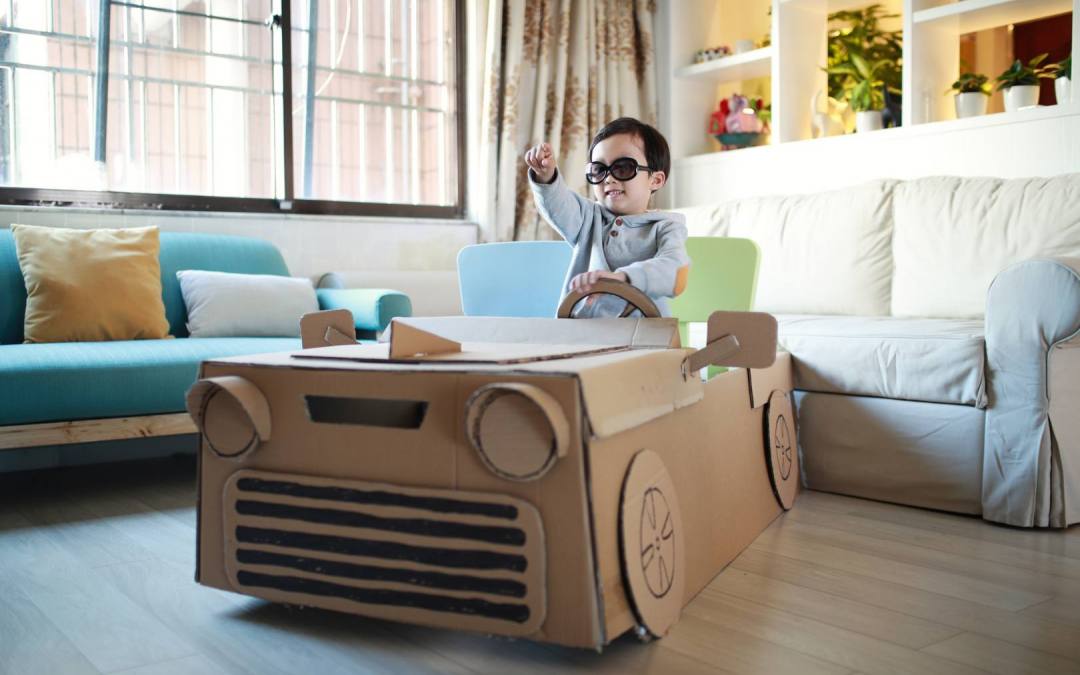
2. Embrace a good mess.Relax and don’t worry about a mess, most things can be cleaned up and creativity often results in a messy space. When kids are in their creative element, messes can quickly develop. The next time your child asks to paint or wants to get everything out of a supply bin, make room for it (and/or take it outside). You might have to contend with a mess, but the creative benefits will surpass this temporary inconvenience.

3. Be mindful when you praise. Don’t praise just for the sake of it, make it meaningful. Too much praise can hinder a child’s independent thinking. The problem with praise is that it can strip a child from searching for his own internal motivations. This isn’t to say that all praise is bad, but next time you’re tempted to praise, try saying something objective such as, “I see that you used a lot of different colors in that painting,” or “You’re working really hard on that math problem.”

4. Be open-minded. Offer your child choices as a way to encourage independent thinking. You may not be in the habit of eating breakfast at dinner, but if your child says she wants to eat cereal for dinner, make allowances for that. If she wants to help in the kitchen, try turning your kitchen into a science lab and give her open access to a handful of ingredients and kitchen tools.

5. Model creativity. Show your children what creativity looks like, or better yet, let them show you and allow you to unleash your inner child. What’s your creative outlet? Where do you enjoy putting your creative energy? Cooking, singing, gardening, drawing, dancing? Children who watch their parents engage in creative activities are more likely to embrace these activities themselves.

6. Give them room. This may seem to contradict #5 a bit, but it’s important to remember that this is all about striking a balance. You don’t want your child to feel like they are being constantly watched, this may make her less likely to take risks, which would diminish her creativity. If you encourage autonomy, you’ll see your child’s imagination bloom. The next time your child is engaged in quiet play, drawing, tinkering, or writing, refrain from jumping in with a comment like “what are you drawing?” This will only pull her out of the zone. Instead, take the time and do something special for yourself.

7. Set aside creativity time. This can be hard, especially for working parents, but children need unstructured time to imagine, build, experiment, and explore. It could be half an hour after dinner, time in bed before reading a book, or an hour of simply unstructured time. Look at the family schedule and make sure that there’s time set aside for this.

8. The basics are fine. Toys and social networking are fun, and definitely have their place, but they don’t build creative thinkers the way sticks, tubes, office supplies, sand, circuits, magnets, and water do. Take a quick inventory of where your kids spend their free time. What do they use the most? Can you swap a close-ended object or activity with an open-ended one?

9. Reduce screen time. It can be hard for some families to remove screen time altogether, but we can all make an effort to spend less time in front of the screen. Time spent watching videos or cartoons could be spent drawing, making a robot, or setting up an obstacle course. What could you do to reduce screen time?

10. What other ideas do you have for raising creative kids? There are so many ways to encourage a child’s creativity, and I’d love to hear what works for YOU! What would you add as the #10 way to raise creative kids

City of Melton – A UNESCO Learning City

The City of Melton is the only Australian city that has been endorsed by UNESCO as learning city.

The city achieved this distinction through coming together with the Community Learning Board have chosen to align all Learning Strategies and frameworks to the United Nations Educational, Scientific and Cultural Organization (UNESCO) Framework of Key Features of Learning Cities (2014).

UNESCO Framework of Key Features of Learning Cities

According to the framework established by the United Nations Educational, Scientific and Cultural Organization, a learning city is one that has managed and continue to effectively mobilize its resources in every sector. The mobilization of these sectors is done in order to: promote inclusive learning from basic to higher education, revitalize learning in families and communities, facilitate learning for and in the workplace, extend the use of modern learning technologies, enhance quality and excellence in learning, and lastly to foster a culture of learning throughout life.

In so doing it will create and reinforce individual empowerment and social cohesion, economic and cultural prosperity, and sustainable development. Consequently, this will give rise to lifelong learning that boosts the learning city attribute of the city.

Melton City, the Learning City

Some of the major building blocks that make Melton City a learning city are:

  • Inclusive learning in the educational system
  • Revitalized learning in families and communities
  • Effective learning for and in the workplace
  • Extended use of modern learning technologies
  • Enhanced quality and excellence in learning
  • A vibrant culture of learning throughout life

By operating a learning city, Melton City enables individual empowerment, social cohesion, economic and cultural prosperity, and build a sustainable city.

The recent Melton Lifelong Learning Festival is one such platform that support the strategies of a learning city. The Festival was a huge success and will be back in 2019.

Everyday Heroes

Get In Touch

Looking for more information about something on our website?